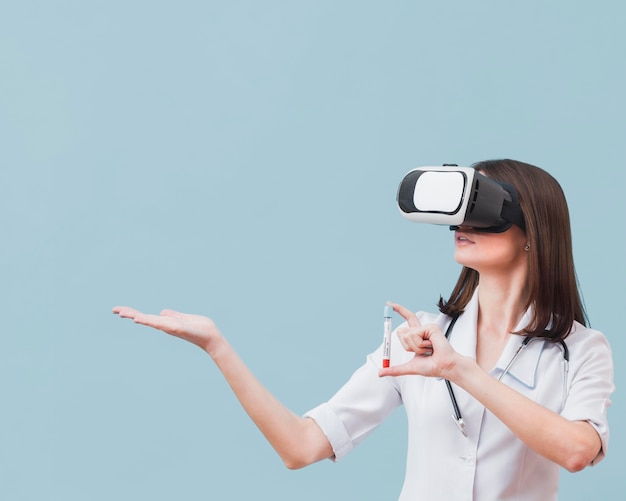
Virtual reality (VR) stands at the forefront of technological advancements, offering transformative potential across various fields, including healthcare education. As the demands on healthcare professionals grow, innovative methods of training and education are essential. VR provides immersive, interactive experiences where practitioners can hone their skills in safe, controlled environments. This technology fosters collaboration, enriches learning experiences, and paves the way for groundbreaking advancements in interprofessional health education.
Virtual reality in healthcare education is transforming collaborative learning by offering immersive and interactive experiences that enhance teamwork and communication among health professionals. This innovative approach enables learners from diverse fields to engage in realistic scenarios within a controlled environment, promoting a deeper understanding of their roles and responsibilities in interprofessional contexts. Through VR training benefits, participants can practice complex procedures and decision-making processes in a safe, risk-free setting, which helps to build confidence and competence. Furthermore, virtual reality facilitates synchronous collaborative learning by allowing multiple users to interact with the same virtual environment simultaneously, fostering a sense of partnership and collective problem-solving. As initiatives like the SPIRIT-SBE project demonstrate, the strategic use of VR in teaching methodologies can lead to more effective communication skills and seamless integration of interdisciplinary teams, marking a significant advancement in health education. More information on this topic awaits you at https://spirit-sbe.eu.
Traditional health education challenges often hinder the development of fully competent healthcare professionals. A prominent limitation is the lack of hands-on experience, where students primarily rely on textbooks and lectures, leaving them underprepared for real-world scenarios. Additionally, traditional methods offer limited opportunities for interprofessional interaction, crucial for fostering collaborative skills across different healthcare roles. This is where VR solutions play a transformative role. Virtual reality introduces simulation-based learning, offering immersive and interactive environments for students to practice and refine their skills. Through realistic simulations, learners can:
Such experiential learning opportunities in VR can bridge the gap left by traditional approaches, equipping future healthcare providers with both technical proficiency and collaborative expertise.
As the future of VR in education continues to unfold, we are poised to witness transformative advancements in interprofessional health training. The immersion and interactive capabilities of virtual reality are set to break the constraints of traditional education, offering a more comprehensive and cohesive learning experience. Anticipated VR advancements, such as enhanced haptic feedback and sophisticated simulation environments, hold the promise of deeper skill acquisition and better retention among healthcare professionals. Moreover, the continuous development of artificial intelligence algorithms within VR systems will facilitate adaptive learning, tailoring experiences to suit the individual needs of diverse learners. These technological innovations will not only enhance interprofessional health training programs but also foster improved patient safety and outcomes. As VR technology progresses, it stands to bridge gaps between disciplines, promoting a robust collaborative healthcare community capable of tackling complex challenges with newfound agility and competence.