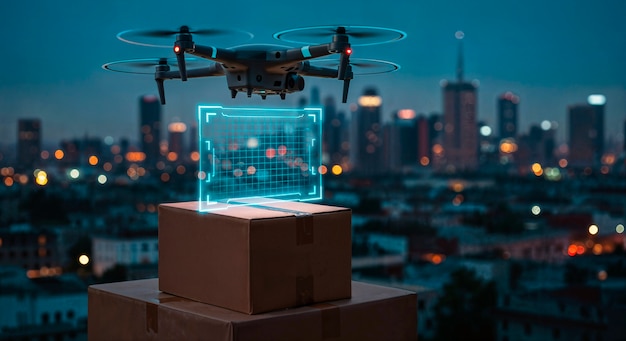
In a rapidly evolving technological landscape, the need for advanced solutions to protect our airspaces has never been more critical. With the increasing occurrence of unauthorized drone activities, enhancing airspace security through sophisticated detection systems has become a top priority. This article explores the latest innovations in drone detection technology and how they bolster our defenses against aerial threats, ensuring safer skies for everyone.
In today’s rapidly evolving technological landscape, airspace threats from unauthorized drones are a growing concern for security professionals. These small yet sophisticated devices can easily bypass traditional security measures, leading to significant security breaches. Unauthorized drones pose numerous challenges, including the risk of collision with manned aircraft, invasion of privacy, and even the delivery of illicit materials. The potential for drones to be used in espionage, smuggling, and targeted attacks adds layers of complexity to maintaining safe and secure airspace.
Addressing these challenges requires a multifaceted approach to airspace security. Key issues include:
To effectively counter these threats, innovative solutions like the MADDOS Radar are essential in enhancing airspace security through advanced detection and neutralization capabilities. You can find additional information on this topic at https://maddos.com/radars/.
The rise of unauthorized drone activity has spotlighted the need for sophisticated drone detection systems that can keep up with evolving threats. Among the cutting-edge technologies leading the charge in this field, radar technology and artificial intelligence are at the forefront. Radar technology offers extensive coverage and is adept at identifying drones over long distances by detecting their unique radar signatures. These systems are becoming increasingly advanced, allowing for precise identification even in challenging environments. On the other hand, the integration of AI in surveillance is revolutionizing how threats are perceived and responded to. AI algorithms enhance detection accuracy and reduce false alarms by learning from vast databases of drone flight patterns and behaviors.
Modern drone detection systems are equipped with features that collectively bolster airspace security, including:
Together, these innovations form a multi-layered detection framework that safeguards sensitive areas from unauthorized drone incursions, further underlined by ongoing research and development in the sector.
Implementing integrated security systems to enhance airspace protection involves incorporating advanced drone detection technologies into existing security frameworks. This not only fortifies defense measures but also optimizes the operational efficiency of security protocols. System implementation requires a thorough assessment of current procedures to identify integration points where advanced systems can be seamlessly merged. Leveraging cutting-edge radar, radio frequency detection, and machine-learning algorithms, such integrated security systems ensure continuous monitoring and rapid response capabilities.
The benefits are manifold, including improved detection accuracy, reduced response time, and enhanced situational awareness. Practical applications of these enhancements are evident in various sectors, such as:
By adopting integrated security systems, airspace protection becomes more robust and adaptive to evolving threats.