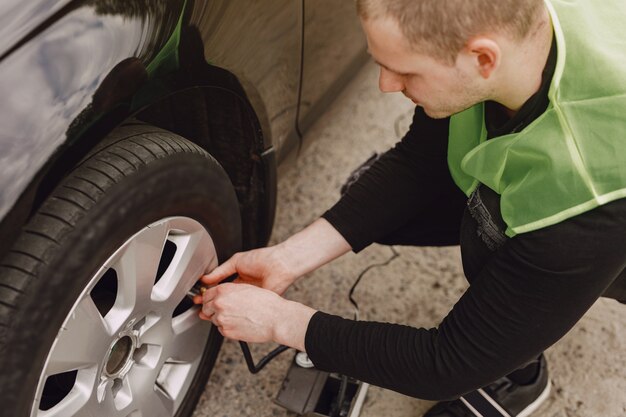
Proper tire inflation is an often overlooked but crucial factor that affects both vehicle safety and performance. Ensuring your tires are inflated to the manufacturer’s recommended levels can greatly enhance your driving experience. Not only does it help prevent accidents by maintaining optimal contact with the road, but it also improves fuel efficiency and reduces wear on tire components. This article explores the various ways in which proper tire inflation influences your vehicle’s safety and performance, providing useful insights for every driver.
Maintaining the correct tire pressure is crucial for ensuring vehicle safety and performance. Properly inflated tires lead to safer driving conditions by providing better traction, more responsive braking, and a smoother ride. Under-inflated tires can compromise safety, increasing the risk of tire blowouts, which can result in loss of vehicle control and potentially severe accidents. Over-inflation is equally dangerous, contributing to decreased tire contact with the road and uneven tire wear. A reliable tire pressure monitoring sensor system plays a vital role in keeping tire pressure at optimal levels. It warns drivers of any irregularities before they lead to dangerous situations, preventing tire blowouts and enhancing fuel efficiency. By actively monitoring tire pressure, drivers are better equipped to tackle unforeseen road hazards, improving overall safety. In summary, monitoring and maintaining the correct tire pressure protects passengers while enhancing vehicle performance.
Proper tire inflation plays a crucial role in maximizing fuel efficiency, making it a vital consideration for eco-friendly driving. Tire pressure directly impacts rolling resistance, which is the force resisting the motion when a tire rolls on a surface. Underinflated tires increase rolling resistance, requiring the engine to exert more power to maintain speed, thus consuming more fuel. Conversely, when tires are inflated to the recommended pressure, rolling resistance is minimized, allowing the vehicle to use less energy over the same distance. This enhancement in fuel efficiency not only reduces fuel costs but also lessens the vehicle’s carbon footprint, contributing to a greener environment. Therefore, maintaining the right tire pressure is not just about safety; it is about optimizing vehicle performance and embracing eco-friendly driving habits. Regularly checking and adjusting tire pressure ensures that your vehicle operates efficiently, saving energy and promoting sustainability on every journey.
Proper tire inflation is a critical factor in extending tire lifespan and minimizing maintenance needs. Ensuring your tires are inflated to the manufacturer’s recommended pressure prevents uneven wear, which is a common issue that can significantly reduce tire longevity. Uneven wear occurs when tires are under-inflated or over-inflated, causing specific areas of the tread to wear out faster than others. This not only shortens the tire lifespan but also necessitates more frequent replacements, adding to maintenance costs. Maintaining ideal tire pressure offers a balanced contact patch with the road, which optimizes performance and distributes weight evenly across the tire surface. By avoiding problems associated with uneven wear, such as poor handling and increased rolling resistance, you also enhance overall vehicle safety. Thus, regular checks and adjustments to tire pressure can save money in the long run and ensure safer driving conditions by reducing the likelihood of tire blowouts and other failure scenarios.