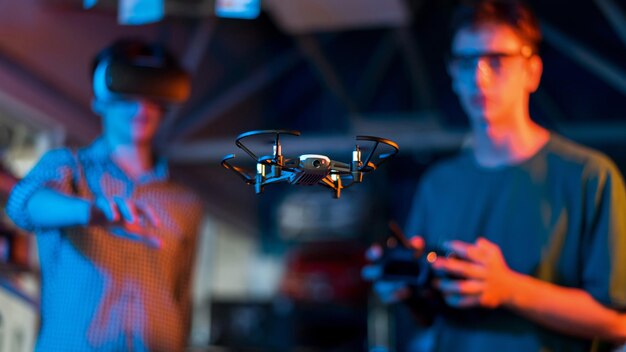
In the rapidly evolving field of emergency response, drones have emerged as pivotal tools that enhance operational efficiency and safety. These sophisticated devices provide unparalleled aerial perspectives and real-time data, revolutionizing how emergencies are managed. From aiding in search and rescue missions to enabling effective disaster management, drones are becoming indispensable assets, pushing boundaries and setting new standards in the field. The integration of drones into emergency protocols is a testimony to technological advancement aimed at saving lives and maximizing impact.
Recent advancements in drone innovations have introduced groundbreaking changes in emergency services, significantly enhancing crisis management capabilities. Unmanned aircraft systems, such as the cutting-edge MADDOS, are at the forefront of these technology breakthroughs. These systems offer unparalleled efficiency by providing rapid aerial assessments in disaster-stricken areas, thereby minimizing response times and enabling more targeted relief efforts. The ability to quickly deploy and reconfigure drones for diverse tasks, from reconnaissance to delivering critical supplies, illustrates a transformative impact on emergency response strategies.
Integrating these sophisticated unmanned aircraft systems into emergency operations allows for enhanced situational awareness through high-resolution imagery and real-time data transmission. This has been particularly beneficial in complex environments where ground access is limited. As technology breakthroughs continue to evolve, the role of drones in emergency services will only expand, providing essential tools for first responders and reshaping how communities manage and recover from crises globally. Explore more about these advancements in unmanned aircraft systems.
The advent of drone technology has significantly transformed search and rescue operations by providing unparalleled aerial support in scenarios where traditional methods fall short. Equipped with advanced imaging systems, drones in rescue missions offer real-time data and visual coverage over expansive and difficult terrains, enhancing the efficiency and speed of identifying and locating missing persons. As a result, the window to effectively rescue individuals in distress has been broadened, with drones being able to cover large areas more quickly than ground-based personnel.
Furthermore, drones have proven indispensable in delivering critical supplies such as first aid, food, and communication devices to stranded individuals in otherwise inaccessible regions. This capability not only supports life-saving interventions but also assures victims that help is on the way. By integrating drones into search and rescue missions, emergency response teams are better equipped to deal with a variety of challenging environments, ultimately improving the outcomes of these critical operations.
In the realm of natural disaster response, drones are swiftly becoming essential tools, playing a pivotal role in revolutionizing how emergency teams address catastrophes. These unmanned aerial vehicles offer a bird’s-eye view, enabling swift and real-time assessment of affected areas, which can be crucial in the aftermath of hurricanes, earthquakes, and floods. By providing immediate access to high-resolution images and video, drones in disaster management allow first responders to evaluate the extent of damage and pinpoint locations that require urgent assistance, ensuring that resources are deployed effectively and efficiently.
Moreover, drones contribute significantly to disaster relief efforts by reducing the risk to human life. As drones can safely navigate areas too dangerous or difficult for humans to access, they can deliver medical supplies, food, and water to stranded victims without the need for human intervention. This capability not only speeds up the relief process but also allows emergency personnel to focus on other critical tasks, ultimately enhancing the overall response strategy and improving outcomes in disaster-stricken regions.