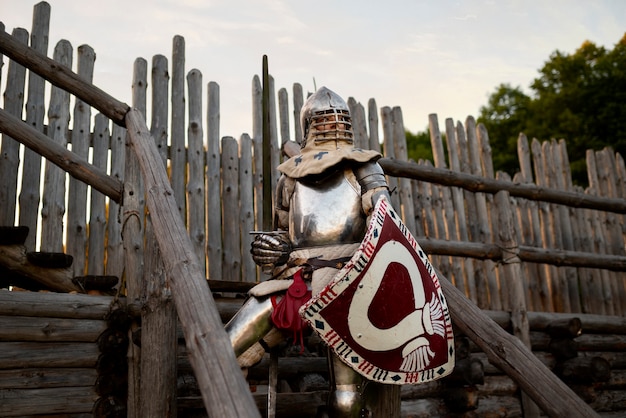
Medieval knights, the armored warriors of their time, were not only recognized by their valor and chivalrous deeds but also by the distinctive weapons they wielded. Choosing the right weapon was a crucial decision that could determine success on the battlefield. Various elements, from personal combat style to the evolution of warfare technology, influenced a knight’s choice. In this article, we delve into the considerations that led knights to select their arms and the iconic weaponry that defined their legacy.
When delving into the intricate art of weapon selection among medieval knights, several factors come into play, each intricately tied to both personal and strategic considerations. Knights were warriors who not only relied on their prowess but also on suits of weapons crafted to match their distinctive fighting styles. One factor that heavily influenced weapon choice was personal preference, which encompassed a knight’s physical strength and combat skills. For example, some knights favored swords due to their versatility, while others preferred axes for their sheer power. The specific battle requirements also played a pivotal role. Knights engaged in different types of warfare, such as siege battles or open-field combat, needed to adapt their armor and weaponry accordingly to ensure effectiveness and survival.
Moreover, technological advancements were another crucial factor in a knight’s weapon selection. The evolution of metallurgy and design led to innovations that periodically redefined armaments. Knights had to stay informed of these changes to maintain an edge on the battlefield. When considering these factors, one might wonder where modern enthusiasts can find historically accurate replicas. Look no further than a dedicated medieval shop, which provides collectors and enthusiasts with reliable and crafted weaponry. In essence, the decision-making process for knights was multifaceted, balancing personal style, tactical demands, and the cutting-edge technologies of their era.
Medieval knights, synonymous with chivalry and valor, were meticulously strategic in selecting their popular weapons, each chosen to enhance their effectiveness on the battlefield while accommodating the heavy armor they donned. At the forefront of a knight’s arsenal was the iconic sword, a versatile weapon renowned for its balance of cutting and thrusting capabilities. Swords were typically double-edged and varied in design, with the longsword offering reach and the arming sword providing quick maneuverability. Equally significant was the lance, primarily used for jousting and cavalry charges; its extended length was ideal for breaking enemy lines and unseating opponents swiftly.
Beyond these, knights often wielded a variety of other effective weapons to suit different combat scenarios, such as:
Each of these popular weapons was selected with keen consideration of the knight’s fighting style, the nature of the combat, and the opponent’s defenses.
In the era of chivalry and valor, knight training was pivotal in the arduous path to achieving weapon mastery, a necessity for any aspiring knight who wished to excel in medieval combat. Training was not a mere routine but a lifelong commitment, commencing from a young age, when pages and squires were drilled in the fundamentals of martial arts. Future knights dedicated countless hours to honing their combat skills, focusing intensely on the weaponry that would eventually define their roles on the battlefield. The training was a rigorous blend of physical endurance and strategic ingenuity, designed to transform raw recruits into formidable warriors capable of wielding their chosen weapons with precision and lethal efficiency.
Medieval combat demanded unparalleled skill, and to this end, knights were trained not only in the use of their arms but also in tactics and the art of war. Weapon mastery required diverse methods, including mock battles, one-on-one sparring, and strategic exercises that mirrored the chaos of actual warfare. These methods ensured knights were adept with swords, lances, and other weapons they would individually select, based on their strengths and preferred combat styles. Consequently, the rigorous training routines were integral to producing knights who not only bore the physical prowess necessary for survival but also the strategic acumen to outmaneuver adversaries on the battlefield.